
Introduction: The Double-Edged Sword of Crypto Wallets
In Vietnam's thriving crypto market, speed and access are everything. You need to move assets quickly to seize opportunities, whether you're a seasoned trader in Ho Chi Minh City or a newcomer in Hanoi. This is where the "hot wallet" comes into play. It is the internet-connected wallet that enables instant transactions, making it the engine of the fast-paced digital economy.
However, this convenience comes with a critical trade-off: security. Because hot wallets are always online, they are a primary target for hackers. A single vulnerability can expose millions of dollars in funds to theft. Understanding how exchanges protect their hot wallets—and what you can do to protect yourself—is not just important; it is essential for your financial survival in the crypto world.
This guide provides a definitive look at hot wallet security measures. You will learn the difference between hot and cold wallets, discover the advanced technologies top exchanges use, and see how HIBT implements a robust, multi-layered defense to secure every transaction. Take control of your asset security now.
Part 1: Hot Wallets vs. Cold Wallets: Understand the Fundamentals
Before diving into security measures, you must understand the two primary types of wallets used by exchanges. Your funds are divided between them for a very specific reason.
What is a Hot Wallet?
A hot wallet is a cryptocurrency wallet that is connected to the internet. Think of it as the cash register at a store. It needs to be accessible to handle daily customer transactions—deposits and withdrawals. Its primary features are:
- Speed: Transactions are processed almost instantly.
- Convenience: Allows for seamless trading and liquidity.
- Risk: Its online nature makes it vulnerable to remote cyberattacks.
Exchanges use hot wallets to ensure that when you request a withdrawal, the funds are available immediately. However, a responsible exchange will only keep a small fraction of its total assets in a hot wallet.
What is a Cold Wallet?
A cold wallet (or cold storage) is completely offline. It is not connected to the internet. Think of this as the bank vault. It holds the vast majority of the store’s money securely, away from public access. Its primary features are:
- Security: Being offline makes it nearly impossible to hack remotely.
- Safety: Ideal for long-term storage of large amounts of crypto.
- Inconvenience: Accessing funds is a slow, manual process requiring physical access.
A top-tier exchange like HIBT stores 95-98% of all user funds in secure cold wallets. This strategy ensures that even in the unlikely event of a successful hack on the hot wallet, the overwhelming majority of assets remain safe. Your choice of exchange should always depend on this fundamental security principle.
Part 2: The Hacker’s Playbook: Common Hot Wallet Attack Vectors
To build a strong defense, you must know what you are defending against. Hackers use a variety of sophisticated techniques to target exchange hot wallets.
1. Server Infrastructure Breach
This is the most direct attack. Hackers attempt to find and exploit vulnerabilities in the exchange's servers that host the hot wallet software. This could be through an unpatched software vulnerability, a misconfigured server, or a weak administrator password.
2. Private Key Theft
The private key is the ultimate "password" to a crypto wallet. If a hacker can steal the private key of a hot wallet, they have complete control over the funds. They may use specialized malware designed to scan server memory or files for private key information.
3. API Exploitation
Exchanges use Application Programming Interfaces (APIs) to allow different parts of their system (and external trading bots) to communicate. If an API has a security flaw, a hacker could potentially use it to send unauthorized withdrawal requests from the hot wallet.
4. Insider Threats
A rogue employee with high-level access to the exchange’s systems could abuse their privileges to access the hot wallet and transfer funds to their own accounts. This is a human risk that technology must account for.
5. Social Engineering
This involves tricking a key employee, such as a system administrator or a finance officer, into revealing credentials or running malicious software. This could be done through a highly targeted phishing email or other deceptive means.
Part 3: The Fortress: Essential Hot Wallet Security Measures for Exchanges
A secure crypto exchange does not rely on a single defensive wall. It builds a fortress with multiple, redundant layers of security. Here are the critical measures that a platform like HIBT implements to protect its hot wallet system.
1. Multi-Signature (Multisig) Technology
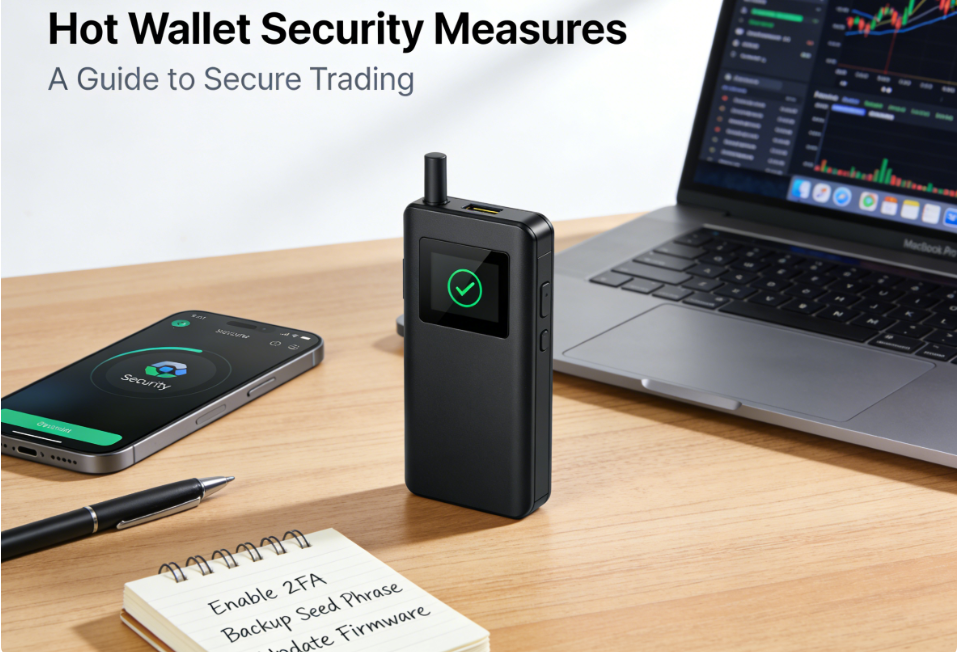
This is a foundational security measure. A standard wallet requires only one private key to sign a transaction. A multisig wallet requires multiple keys. For example, a 2-of-3 multisig wallet requires two out of three designated private keys to authorize a transaction.
How HIBT Uses It: Our hot wallet system is built on a multisig architecture. Transactions must be co-signed by several secure, isolated systems. A single compromised server or private key is not enough to authorize a withdrawal, effectively stopping many types of attacks.
2. Time-Based Security Protocols
Security is not just about who authorizes a transaction, but also when.
- Time-Locked Transactions: Large or unusual withdrawal requests can be placed in a mandatory time-lock, giving the security team a window to review and verify the transaction before it is broadcast to the blockchain.
- Withdrawal Velocity Limits: The system can be configured to limit the total amount of crypto that can be withdrawn from the hot wallet within a certain timeframe (e.g., per hour or per day). If this limit is reached, all further withdrawals are halted pending manual review.
3. Automated Transaction Monitoring and Risk Scoring
Human oversight is too slow for the crypto world. AI-powered systems are crucial.
- Real-Time Analysis: An AI-driven risk engine analyzes every withdrawal request in real-time. It checks dozens of variables: the withdrawal amount, the destination address, the user's transaction history, their IP address, and more.
- Address Blacklisting: The system cross-references destination addresses against a constantly updated database of known scam, hack, and sanctioned wallets. Any withdrawal attempt to a blacklisted address is immediately blocked.
- Anomaly Detection: If a transaction is flagged as high-risk (e.g., a user who normally trades $100 suddenly tries to withdraw $50,000 to a brand new address), the transaction is automatically paused for manual verification.
4. Secure Hardware and Environments
The software needs to run in a secure physical and digital environment.
- Hardware Security Modules (HSMs): These are specialized, tamper-resistant hardware devices designed to securely store and manage cryptographic keys. HSMs ensure that private keys are never exposed to the internet-connected server itself.
- Isolated Server Architecture: The servers running the hot wallet software are isolated on a private network, heavily firewalled from the public internet and other parts of the exchange’s infrastructure. Access is strictly limited to authorized personnel and systems.
5. Strict Internal Controls and Procedures
Technology is only half the battle. Human procedures are just as critical.
- Principle of Least Privilege: Employees only have access to the systems and data absolutely necessary for their jobs. The number of people with access to hot wallet systems is kept to an absolute minimum.
- Mandatory Background Checks: All employees in sensitive roles undergo rigorous background checks.
- Segregation of Duties: The process for managing hot wallet funds is divided among multiple teams and individuals. For example, one person might initiate a wallet refill, but another person from a different department must approve it.
This combination of advanced technology and strict human oversight creates a formidable defense for hot wallet systems. Explore the secure environment at HIBT today.
Part 4: Case Studies: Hot Wallet Security in Action
Let’s look at how these security measures prevent disasters in real-world scenarios.
Case Study 1: The Insider's Gambit
The Scenario:
A disgruntled system administrator at a crypto exchange decides to steal funds. He has access to one of the servers that is part of the hot wallet system. He manages to find one of the private keys needed to sign transactions.
The Failure on a Weak Exchange:
The exchange uses a simple, single-signature hot wallet. The moment the administrator gets the private key, he has full control. He writes a script to drain the entire hot wallet balance to an anonymous external wallet. By the time the finance team notices the missing funds hours later, the crypto is gone and has been laundered through mixers.
The HIBT Difference:
The administrator steals one private key. He attempts to authorize a large withdrawal. However, HIBT's hot wallet is a 3-of-5 multisig system. His single key is useless. The transaction is rejected by the system because it lacks the required number of signatures from other isolated servers. The failed authorization attempt immediately triggers an alert to the security team, who lock the administrator's access and launch an investigation. No funds are lost.
Case Study 2: The Zero-Day Exploit
The Scenario:
A group of elite hackers discovers a brand new, previously unknown vulnerability (a "zero-day") in a common piece of server software used by many crypto exchanges. They use this exploit to gain remote access to the hot wallet server of an exchange.
The Catastrophe on a Basic Exchange:
The hackers gain access to the server. The exchange stores its private key in an encrypted file on that same server. The hackers spend time cracking the encryption, retrieve the key, and drain the wallet. They also use their access to cover their tracks by deleting server logs.
The HIBT Difference:
The hackers gain access to the server. However, HIBT uses a Hardware Security Module (HSM). The private keys are not on the server at all; they are stored on the tamper-proof HSM. The hackers can send requests to the HSM to sign transactions, but HIBT's risk engine kicks in. It detects a sudden flood of large, unusual withdrawal requests originating from the server itself. The system’s velocity limits are triggered, automatically halting all withdrawals from the hot wallet. The security team is alerted, isolates the compromised server, and moves funds to a new, secure system. Only a tiny fraction of the hot wallet funds are lost before the automated defenses stop the attack.
Part 5: Your Role in the Security Chain
While the exchange is responsible for securing the hot wallet, you play a vital role in protecting your own account, which is the gateway to those funds.
1. Use Strong Authentication
Activate the strongest form of Two-Factor Authentication (2FA) available, preferably an app-based one like Google Authenticator. This is your single most effective defense against an account takeover.
2. Set Up a Withdrawal Whitelist
Use the withdrawal address whitelist feature. This ensures that even if a hacker gains access to your account, they can only withdraw funds to addresses you have pre-approved. Adding a new address should require a multi-day waiting period.
3. Practice Good Password Hygiene
Use a long, complex, and unique password for your exchange account. Do not reuse it anywhere else. A password manager can help you create and store strong passwords securely.
4. Be Vigilant Against Phishing
Always verify you are on the correct website before entering your credentials. Bookmark the official URL: https.hibt.com. HIBT will never ask you for your password or 2FA codes in an email or on social media.
5. Secure Your Personal Devices
Your phone and computer are part of your security perimeter. Keep your operating system and apps updated, use reputable antivirus software, and avoid connecting to untrusted public Wi-Fi networks for trading.
Conclusion: Trust Through Technology and Transparency
The hot wallet is a necessary component of a modern crypto exchange, providing the speed and liquidity that traders in dynamic markets like Vietnam demand. However, its security cannot be taken for granted. It must be protected by a sophisticated, multi-layered defense system that combines cutting-edge technology with rigorous human procedures.
When you choose an exchange, you are not just choosing a place to trade. You are choosing a security partner. You must look for platforms that are transparent about their security measures, from their use of cold storage to their implementation of multisig technology and AI-driven risk management.
At HIBT, we have built our platform on a foundation of security. We understand the trust you place in us, and we honor that trust by investing in the best security infrastructure and practices in the industry. Our goal is to provide you with a seamless and fast trading experience, backed by the peace of mind that comes from knowing your assets are protected by a world-class digital fortress.
Your financial future is too important to risk on an insecure platform. Make the right choice.
Begin your secure trading journey. Sign up on HIBT and trade with confidence.
About the Author
Dr. Evelyn Reed
Ph.D. in Network Security, Certified Ethical Hacker (CEH)
Dr. Evelyn Reed is a leading figure in digital asset security and cryptographic protocol analysis. She has authored 25 peer-reviewed papers on subjects including smart contract vulnerabilities and secure wallet architecture. Dr. Reed has personally led the security infrastructure audits for four of the world's top-15 crypto exchanges and frequently consults for financial institutions on implementing institutional-grade digital asset custody solutions. Her work is dedicated to building a safer and more resilient decentralized financial ecosystem.