
The cryptocurrency landscape in Vietnam is booming. From the bustling coffee shops of Ho Chi Minh City to the tech hubs of Hanoi, digital assets are becoming a staple of modern investment portfolios. However, with this rapid adoption comes a critical responsibility: security. The headlines are often riddled with stories of exchange hacks and phishing scams, leaving investors vulnerable.
If you are serious about protecting your wealth, understanding Cold Storage Best Practices is not optional—it is mandatory.
This comprehensive guide is designed for everyone, from the first-time buyer purchasing their first fraction of Bitcoin to the seasoned whale managing a diverse portfolio. We will dismantle complex security concepts into actionable steps, ensuring your digital assets remain exactly where they belong: under your control.
Why Cold Storage is the Gold Standard
Before we dive into the "how," we must establish the "why." In the world of cryptocurrency, there is a golden rule: "Not your keys, not your coins."
When you leave your assets on a centralized platform without proper precautions, you are trusting a third party with your money. While platforms like HIBT employ top-tier security measures to protect user funds on the exchange, the ultimate safeguard for long-term holding is self-custody via cold storage.
Cold storage refers to generating and storing your private keys offline, completely disconnected from the internet. This "air gap" makes it virtually impossible for hackers to access your funds remotely. Unlike "hot wallets" (mobile apps or browser extensions connected to the web), cold storage is a vault that is immune to malware, keyloggers, and remote phishing attacks.
For the Vietnamese market, where mobile adoption is incredibly high (89% of users prefer mobile apps), the risk of mobile-based malware is a real concern. Cold storage acts as the ultimate firewall against these digital threats.
The Hierarchy of Cold Storage Solutions
Not all cold storage is created equal. Depending on your technical expertise and the value of your portfolio, you should choose the method that balances security with usability.
1. Hardware Wallets (The Industry Standard)
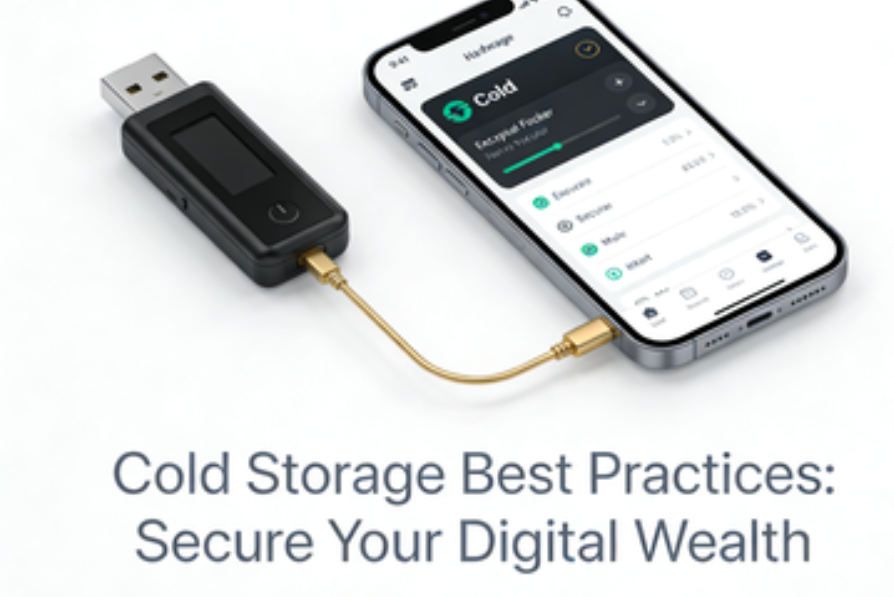
Hardware wallets are physical devices—often resembling USB drives—that store your private keys in a secure chip. They allow you to sign transactions without your private keys ever touching an internet-connected device. Popular brands include Ledger, Trezor, and SafePal.
Pros:
- User-friendly interfaces.
- High security against remote attacks.
- Supports thousands of different coins and tokens.
Cons:
- Upfront cost (usually $50 - $150).
- Physical device management required.
2. Paper Wallets (The Old School Method)
A paper wallet is simply a piece of paper with your public and private keys printed on it (often as QR codes). This is the ultimate "offline" method, but it is fragile.
Pros:
- Free to generate.
- Impossible to hack digitally.
Cons:
- Paper degrades, burns, and can be lost easily.
- Sweeping funds from paper wallets can be technically tricky for beginners.
- If your printer has a memory cache, the keys could be compromised during printing.
3. Multi-Signature (Multisig) Wallets (The Fortress)
This is an advanced setup requiring multiple keys to authorize a transaction (e.g., 2-of-3 keys). You might hold one key on a hardware wallet, one on a paper wallet in a bank vault, and one on a device held by a trusted family member.
Pros:
- Eliminates the "single point of failure."
- Highest level of security for large amounts.
Cons:
- Complex to set up.
- Transaction fees are higher.
Core Cold Storage Best Practices: The Setup
Setting up your cold storage is the most critical phase. A mistake here can compromise your security forever. Follow these directive steps to ensure a fortress-like setup.
Buy Directly from the Manufacturer
Never buy a hardware wallet from a third-party reseller, eBay, or an unauthorized shop on Shopee or Lazada. Supply chain attacks are real. Hackers can intercept packages, tamper with the device (installing malicious chips or pre-seeding the wallet), and repackage it to look new.
- Action: Always order directly from the official manufacturer's website to ensure the device is pristine.
Verify Device Integrity
Upon receiving your device, inspect the packaging for tampering. Most modern devices have cryptographic checks. When you plug the device into your computer and connect to the official companion app, it should perform a genuine check. If the software warns you that the device is not genuine, do not use it.
The Seed Phrase Ritual
Your recovery phrase (Seed Phrase) is the master key to your wealth. It is usually a list of 12 or 24 words.
- The Golden Rule: Never, under any circumstances, type these words into a computer, smartphone, or take a photo of them.
- The Analog Requirement: Write them down with a pen on paper provided in the box. Better yet, punch them into a steel plate (like a Cryptosteel) to protect against fire and flood damage.
- Verification: Most devices will ask you to re-confirm the words immediately. Do not rush this process.
Passphrase Protection (The "25th Word")
For those with significant holdings, enable the "Passphrase" feature. This adds a custom word (chosen by you) to the standard 24 words.
- If someone finds your 24 words, they still cannot access your funds without the passphrase.
- Warning: If you forget this passphrase, your funds are lost forever. There is no "forgot password" button in crypto.
Operational Security: Maintaining Your Cold Storage
Owning the device is only half the battle. How you use it defines your security posture.
Firmware Updates
Manufacturers release firmware updates to patch security vulnerabilities and add features.
- Action: Check for updates once a quarter. Only update through the official software interface. Never click on email links claiming you need a "critical firmware update"—this is a common phishing tactic.
The "Test Flight" Transaction
Before you move your life savings into cold storage, perform a test.
- Set up the wallet and write down the seed phrase.
- Send a small amount of cryptocurrency (e.g., $10 worth of USDT or ETH) from your HIBT account to the cold wallet address.
- Wipe the device completely (reset to factory settings).
- Restore the device using your written seed phrase.
- If the $10 reappears, your backup is valid. You can now deposit the rest.
Address Verification
Malware exists that can swap clipboard addresses. When you copy an address to send funds, a virus can replace it with a hacker's address.
- Action: Always verify the address on the physical screen of the hardware wallet. The device screen cannot be hacked. If the address on your computer screen matches the address on the device screen, it is safe to sign.
Integrating Exchanges with Cold Storage
A robust crypto strategy often involves a hybrid approach: using a high-performance exchange for trading and cold storage for holding.
The Accumulation Phase on HIBT
Many Vietnamese investors use HIBT for its localized experience and liquidity. You might trade actively to take advantage of market volatility or acquire new tokens listed on the platform.
- Strategy: Define a "threshold" for your exchange balance. For example, if your trading profits exceed 50 million VND, sweep the excess profit into cold storage. This secures your gains while leaving you with capital to continue trading.
Withdrawal Hygiene
When moving funds from an exchange to cold storage:
- Whitelist Addresses: Use the address whitelisting feature on the exchange. This ensures that even if your exchange account is compromised, funds can only be withdrawn to your specific cold wallet address.
- Network Selection: Be careful with network selection (ERC20, TRC20, BEP20). Ensure your cold wallet supports the network you are using to withdraw. Sending tokens to the wrong network on a cold wallet can make recovery difficult or impossible.
Case Studies: Cold Storage in the Real World
To illustrate these principles, let's look at two hypothetical scenarios reflecting the Vietnamese market.
Case Study 1: The "Safe Start" (Beginner)
Profile: Tuan, a 24-year-old marketing executive in Ho Chi Minh City.
Portfolio: $2,000 in Bitcoin and Ethereum.
Goal: Long-term savings for a house.
The Situation: Tuan was keeping his funds on a mobile wallet on his phone. He often connects to public Wi-Fi at coffee shops. He realized this was a security risk.
The Solution:
- Tuan purchased a basic hardware wallet (e.g., Ledger Nano S Plus).
- He wrote his 24 words on the recovery sheet and stored it in a waterproof bag inside his personal safe at home.
- He treats his hardware wallet as a "Savings Account." Every month, he buys crypto on HIBT using bank transfer, and immediately withdraws it to his hardware wallet.
- Result: Tuan sleeps soundly knowing that even if he loses his phone, his savings are offline and secure.
Case Study 2: The "Fortress" (Institutional/Whale)
Profile: Mai, a 35-year-old early crypto adopter and angel investor in Hanoi.
Portfolio: High six figures (USD) in diverse altcoins and BTC.
Goal: Generational wealth preservation.
The Situation: Mai holds significant assets and is worried about physical theft or coercion ("the $5 wrench attack").
The Solution:
- Mai implements a Multi-Signature setup (2-of-3) using distinct hardware wallets from different brands (to avoid a supply chain failure from one company).
- Key 1: Stored in a bank safety deposit box in Hanoi.
- Key 2: Stored in a hidden safe at her parents' home in Da Nang.
- Key 3: Kept in her office for viewing balances (but cannot sign alone).
- She utilizes a "Passphrase" on her main hardware wallet. She also keeps a "decoy" wallet with a small amount of funds ($500) that can be opened with a different PIN code. If she is ever forced to unlock her wallet, she unlocks the decoy wallet.
- Result: Her funds are geographically distributed. No single point of failure exists. Even a physical attack on her person would not yield the funds.
Common Mistakes That Lead to Loss
Even with the best hardware, human error is the biggest vulnerability. Avoid these fatal mistakes:
- Digital Storage of Seeds: Never save your seed phrase in a password manager, a text file on your desktop, or a draft email. Cloud services are high-value targets for hackers. If it is digital, it is hackable.
- Ignoring Physical Security: Do not leave your hardware wallet plugged into your laptop when you are not using it. Treat it like a physical key to a vault.
- Complicating the Setup: Do not create a security scheme so complex that you cannot access your own funds. We have seen investors bury seed phrases in random GPS locations and then forget where they are. Simplicity, executed perfectly, is better than complexity executed poorly.
- Trusting "Support" Agents: No legitimate support team from a wallet manufacturer or an exchange will ever ask for your seed phrase. If someone asks for your 12 or 24 words, it is a scam. Block and report them immediately.
Disaster Recovery Planning
What happens if you die or become incapacitated? This is a grim but necessary question for cold storage best practices.
If you are the only person who knows where your seed phrase is, your crypto dies with you.
- Action: Create a "Dead Man's Switch" or a simple inheritance plan. This could be a sealed envelope given to a trusted lawyer or family member, containing instructions on how to access the seed phrase (but perhaps not the passphrase, which is held by someone else).
- For Vietnamese families, where financial discussions can be communal, it is vital to educate at least one trusted person (spouse or sibling) on the basics of what a hardware wallet is. They don't need access now, but they need to know it's not just a USB drive to be thrown away.
Conclusion: Your Independence Awaits
Implementing cold storage best practices is not just about technology; it is about mindset. It is the realization that in the decentralized economy, you are your own bank. You are your own security guard.
The transition from keeping everything on an exchange to managing your own cold storage can feel daunting, but it is the defining characteristic of a mature investor. By following the protocols outlined above—verifying devices, protecting seed phrases, and understanding transaction mechanics—you build a foundation of wealth that is resistant to the chaos of the digital world.
Remember, the journey often starts with a reliable partner. For your trading needs, liquidity, and seamless entry into the crypto market, platforms like HIBT provide the perfect gateway. Use them to grow your portfolio, and use cold storage to preserve it.
Secure your future today. Don't wait for a hack to teach you the value of security. Start your journey with a trusted platform, accumulate your assets, and take custody of your financial destiny.
About the Author
Dr. Nguyen Minh
Blockchain Security Researcher & Auditor
Dr. Nguyen Minh is a leading voice in cryptographic security with over a decade of experience in cybersecurity and blockchain architecture. He holds a PhD in Computer Science from the National University of Singapore, specializing in elliptical curve cryptography. Dr. Minh has authored 15 peer-reviewed papers on distributed ledger security and has led smart contract audits for several top 100 DeFi projects. He is a frequent speaker at fintech conferences across Southeast Asia, advocating for self-custody and digital sovereignty.