
Imagine riding a motorbike through the bustling streets of Ho Chi Minh City during rush hour. The traffic is gridlocked, moving inches at a time. You are stuck, frustrated, and wasting fuel. This is exactly what happens on major blockchains like Ethereum when too many users try to transact at once. The network clogs up, speeds plummet, and transaction fees (gas) skyrocket.
Now, imagine if you could open a private, high-speed tunnel that bypasses all that traffic, allowing you to zip from District 1 to District 7 in seconds. Or, imagine a giant bus that picks up thousands of people and drives them all at once in a dedicated express lane.
These solutions exist in the blockchain world. They are called Layer-2 (L2) scaling solutions.
As the Vietnamese crypto market matures—shifting from speculative trading to real-world applications in GameFi, DeFi, and payments—understanding the infrastructure beneath your investments is crucial. Two technologies are fighting for dominance in this space: State Channels and Rollups.
Whether you are a beginner buying your first fraction of Bitcoin on HIBT or a seasoned investor managing a diversified DeFi portfolio, knowing the difference between these two technologies can help you save money on fees, transact faster, and spot the next big investment opportunity.
In this comprehensive guide, we will break down State Channels vs. Rollups, explain how they work, compare their strengths and weaknesses, and explore real-world examples that you are likely already using.
Part 1: The Scalability Crisis and the Layer-2 Rescue
Before diving into the technical battle, we must understand the battlefield. Blockchains like Bitcoin and Ethereum are "Layer-1" networks. They are the base layer of trust. Every transaction must be verified by thousands of nodes (computers) globally to ensure security. This process is secure but slow.
The Problem: The Blockchain Trilemma
Every blockchain faces a trade-off between three core pillars:
- Decentralization
- Security
- Scalability
Most Layer-1 blockchains prioritize Decentralization and Security, sacrificing Scalability. Ethereum, for example, can handle roughly 15-30 transactions per second (TPS). Visa, a centralized network, handles 24,000 TPS. For crypto to achieve mass adoption in a tech-savvy nation like Vietnam, we need Visa-level speeds with blockchain-level security.
The Solution: Layer-2 Protocols
Layer-2 solutions are protocols built on top of the Layer-1 blockchain. They handle the heavy lifting (processing transactions) off the main chain and then report the final results back to the Layer-1.
Think of it like a bar tab.
- Layer-1: Paying for every single drink with a credit card transaction immediately. (Slow, high fees).
- Layer-2: Opening a tab, ordering 10 drinks, and paying the total bill at the end of the night. (Fast, one transaction fee).
State Channels and Rollups are the two most prominent ways to "open a tab" on the blockchain. Let's explore them in detail.
Part 2: Deep Dive into State Channels
State Channels were one of the earliest scaling solutions proposed. They are designed for scenarios where two parties want to exchange multiple transactions rapidly without burdening the main blockchain.
What is a State Channel?
A State Channel is a two-way communication channel between participants that allows them to conduct interactions—usually payments or state updates—off-chain. The blockchain is only used twice: once to open the channel and once to close it.
How It Works: The "Bar Tab" Analogy
Let's use a practical example relevant to many Vietnamese users: Micro-payments for a service. Imagine you are paying a freelancer for hourly work using crypto.
- Opening the Channel (Setup): You and the freelancer deposit funds into a multi-signature smart contract on the main blockchain (e.g., Ethereum). This locks the funds and acts as the "opening balance." Let's say you lock 100 USDT.
- Transacting (Off-Chain): Every hour, you sign a digital message saying, "I pay you 10 USDT." The freelancer signs it too. You keep exchanging these signed messages privately. You can do this hundreds of times. Because this happens off-chain (just between you two), it is instant and costs zero gas fees.
- Closing the Channel (Settlement): Once the job is done, you both sign a final state: "You paid 50 USDT total; 50 USDT returns to you." You submit this final "bill" to the blockchain.
- Finality: The blockchain verifies the signatures, updates the balances, and releases the funds accordingly.
Key Characteristics of State Channels
- Instant Finality: Transactions are approved as fast as the users can sign them. There is no waiting for block confirmations.
- Privacy: Since the intermediate transactions happen privately between users, the public blockchain only sees the opening and closing balance, not the 50 small payments in between.
- Zero Intermediate Fees: You only pay gas fees to open and close the channel. The thousands of transactions in the middle are free.
The Limitations
Despite their speed, State Channels have significant drawbacks:
- Liveness Requirement: Both parties must be online to sign transactions. If your internet cuts out in Hanoi while a channel is open, you can't transact.
- Capital Efficiency: Funds must be locked up in the channel. You cannot use that 100 USDT for anything else while the channel is open.
- Fixed Participants: Channels are typically set up between specific participants. Adding new people requires opening new channels or complex routing.
- Limited Functionality: They are great for simple payments but struggle with complex smart contracts (like Automated Market Makers in DeFi).
Real-World Case Study: The Lightning Network
The most famous example of State Channels is Bitcoin's Lightning Network.
Bitcoin is notoriously slow (7 TPS). The Lightning Network allows users to open payment channels with each other. If you want to buy a coffee with Bitcoin, you don't wait 10 minutes for a block confirmation. You send it instantly via a Lightning channel.
In Vietnam, where mobile payments via QR codes (like MoMo or ZaloPay) are ubiquitous, the Lightning Network offers a similar user experience but using decentralized currency.
Part 3: Deep Dive into Rollups
Rollups represent the "modern era" of scaling. While State Channels focus on private, peer-to-peer lanes, Rollups focus on batch processing. They are currently the dominant scaling solution for Ethereum.
What is a Rollup?
A Rollup is a solution that bundles (or "rolls up") hundreds or thousands of transactions off-chain into a single batch. It then executes these transactions and posts only the compressed data (a summary) back to the main Layer-1 blockchain.
How It Works: The "Zip File" Analogy
Imagine you need to email 1,000 distinct Word documents to your boss. Sending 1,000 separate emails is inefficient and slow. Instead, you put all 1,000 files into a single ZIP folder and send one email.
- Execution: The Rollup processes the transactions (swaps, transfers, NFT mints) on its own high-speed chain.
- Data Availability: It posts the "proof" of these transactions to Ethereum. Because the data is compressed, it takes up very little space on Ethereum, making it much cheaper.
Unlike State Channels, Rollups live on the blockchain (just a secondary layer) and can support complex smart contracts, making them perfect for DeFi and NFTs.
There are two main types of Rollups, distinguished by how they prove to the main chain that the transactions are valid: Optimistic Rollups and Zero-Knowledge (ZK) Rollups.
1. Optimistic Rollups
These rollups are "optimistic." They assume that all transactions in the batch are valid and honest. They post the batch to Ethereum without immediate proof.
- Fraud Proofs: There is a "challenge period" (usually 7 days). During this time, anyone can check the data. If someone spots a fraudulent transaction, they can submit a "fraud proof." If the network verifies the fraud, the transaction is reversed, and the bad actor is penalized.
- Pros: Easier to build, fully compatible with Ethereum (EVM).
- Cons: Withdrawal times are slow (you have to wait for the 7-day challenge period to end before moving funds back to Layer-1).
- Examples: Optimism (OP) and Arbitrum (ARB). These are heavily traded on HIBT and are popular for their low fees.
2. Zero-Knowledge (ZK) Rollups
These rollups use complex cryptography to generate a mathematical proof (called a Validity Proof or SNARK/STARK) that certifies the transactions are correct before posting them to Ethereum.
- Validity Proofs: The Layer-1 blockchain verifies this mathematical proof. If the proof passes, the transactions are instantly finalized. No assumptions, just math.
- Pros: High security, instant withdrawals (no 7-day wait).
- Cons: Extremely technically complex to build; computationally expensive to generate proofs.
- Examples: zkSync, StarkNet, Polygon zkEVM.
Real-World Case Study: Arbitrum (Optimistic Rollup)
Arbitrum has become a hub for DeFi. Vietnamese investors flock to platforms like GMX (a perpetual exchange built on Arbitrum) because trading there costs cents, whereas doing the same on Ethereum would cost dollars. The user experience is identical to Ethereum—same wallets (MetaMask), same addresses—but the engine is a Rollup.
Part 4: State Channels vs. Rollups – The Comparison
Now that we understand the mechanics, let's compare them head-to-head across key categories relevant to users in Vietnam.
1. Cost Efficiency
- State Channels: Winner for high frequency. If you are making 1,000 transactions with the same person (e.g., streaming payments), State Channels are unbeatable because the intermediate transactions are literally free.
- Rollups: Winner for general use. You share the gas fee with thousands of other users in the batch. While not free, fees are typically 90-99% lower than Layer-1.
2. Speed and Finality
- State Channels: Instant. Speed is limited only by your internet connection.
- Rollups: Fast. Transactions are confirmed on the L2 instantly (soft finality), but "hard finality" on L1 depends on the batch posting time (minutes to hours).
3. User Experience (UX) and Complexity
- State Channels: High Complexity. Users often need to run special client software ("watchtowers") to monitor channels for fraud if they go offline. You have to "open" and "close" channels, which creates friction.
- Rollups: Low Complexity. For the average user on HIBT, using a Rollup feels exactly like using Ethereum or BSC. You switch networks in your wallet, and you're done. No opening channels, no locking funds with specific peers.
4. Use Cases
- State Channels: Best for payments, especially micro-payments, peer-to-peer gambling, or metered services (paying per minute of Wi-Fi).
- Rollups: Best for DeFi, NFTs, and General Applications. If you want to use Uniswap, borrow on Aave, or play a complex blockchain game, Rollups are the superior choice because they support full smart contract logic.
5. Capital Efficiency
- State Channels: Low. Your funds are locked in the channel. If you lock 100 USDT to pay Bob, you can't use that 100 USDT to pay Alice unless you close the channel or have a routed path to Alice.
- Rollups: High. Your funds are liquid within the Rollup ecosystem. You can trade, swap, and move assets freely between any protocol on that Rollup.

Part 5: What This Means for Vietnamese Crypto Investors
Vietnam is consistently ranked in the top 5 countries for crypto adoption globally. The market here is unique: mobile-first, community-driven, and highly engaged in GameFi and trading. How does the "State Channels vs Rollups" debate affect you?
1. The Gaming Evolution
Vietnam is the birthplace of the GameFi revolution (think Axie Infinity). Early blockchain games struggled with congestion.
- State Channels were once considered for gaming (e.g., move your character off-chain, save state on-chain).
- However, Rollups are now winning. Most new games are launching on Rollup-based chains like Ronin (an application-specific sidechain/rollup hybrid) or Immutable X (a ZK-Rollup). Why? Because gamers want to own their assets as NFTs and trade them freely, which Rollups handle better.
2. DeFi and Yield Farming
If you are engaging in yield farming or decentralized trading, you are likely already using Rollups.
- Using Ethereum Layer-1 is too expensive for the average investor.
- By bridging assets to Arbitrum or Optimism, Vietnamese investors can participate in DeFi with $100 portfolios, not just $10,000 portfolios. Rollups democratize access to finance.
3. Choosing the Right Network on HIBT
As a user of HIBT, you have access to a wide array of tokens and networks. When you withdraw assets from the exchange to your personal wallet, you often see options like "ERC20", "Arbitrum One", "Optimism", or "Lightning Network" (for BTC).
- Choose Lightning Network if you are moving Bitcoin for small payments or to a Lightning-enabled wallet for instant spending.
- Choose Arbitrum/Optimism if you are withdrawing ETH or stablecoins to participate in the DeFi ecosystem. You save massive amounts on withdrawal fees compared to standard ERC20.
HIBT integrates these Layer-2 networks directly, allowing you to bypass the complex and expensive "bridging" process. You can deposit directly from a Rollup or State Channel to your HIBT account, saving time and fees.
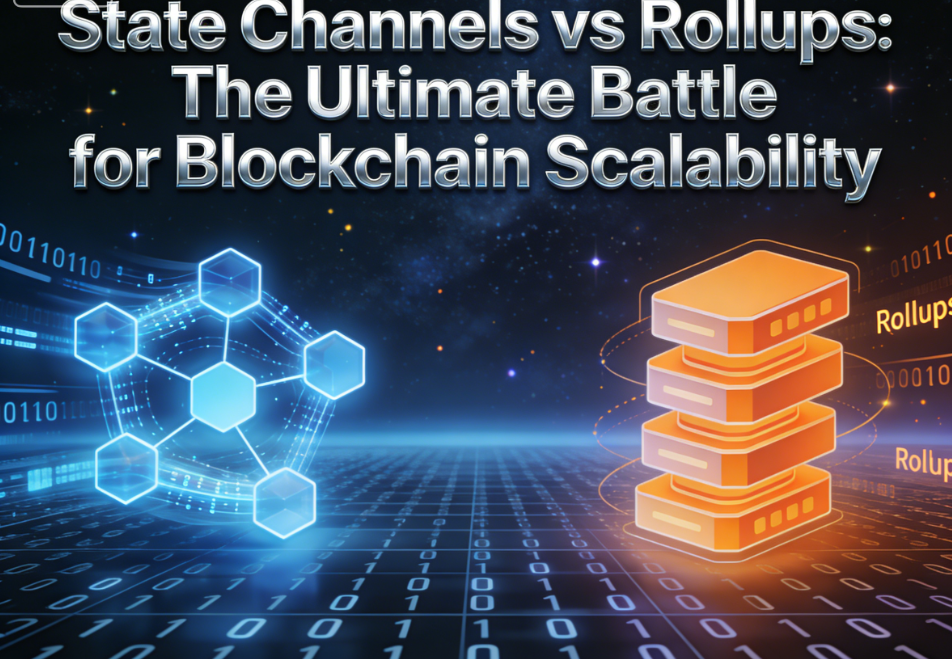
Part 6: The Future Outlook – Convergence?
The war between State Channels and Rollups isn't necessarily a "winner takes all" scenario. The future of blockchain is likely hybrid.
We are moving toward a modular blockchain future.
- Rollups will likely become the standard "Execution Layer" where all smart contracts, DeFi apps, and NFT marketplaces live.
- State Channels might exist on top of Rollups. Imagine playing a poker game on an Arbitrum Rollup. The betting rounds (which happen every second) could occur in a State Channel for zero fees, and the final win/loss is settled on the Rollup.
Furthermore, ZK-Rollups are widely considered the "End Game." As technology improves and generating proofs becomes cheaper, ZK-Rollups will likely offer the best of all worlds: the security of Layer-1, the speed of Layer-2, and instant withdrawals.
For the Vietnamese market, this means the user experience will become seamless. Soon, you won't even need to know if you are using a Rollup or a Channel. You will just open your mobile wallet, click "Send," and it will happen instantly and cheaply.
Conclusion: Empower Your Portfolio with Layer-2 Knowledge
The evolution from Layer-1 congestion to Layer-2 scalability is the most important development in crypto today. While State Channels offer a specific solution for instant payments, Rollups have emerged as the versatile powerhouse driving the DeFi and NFT ecosystems.
Understanding these technologies gives you an edge. It allows you to:
- Save Fees: By transacting on the right layers.
- Move Faster: By utilizing networks with instant confirmation.
- Invest Smarter: By identifying tokens and projects (like ARB, OP, MATIC, IMX) that are building the infrastructure of tomorrow.
Don't let technical jargon intimidate you. The crypto revolution is about financial freedom, and scaling solutions are the tools that make that freedom accessible to everyone.
At HIBT, we are committed to bringing these advanced technologies to the Vietnamese community in a simplified, accessible way. Our platform supports major Layer-2 networks, ensuring that you can trade, deposit, and withdraw with the efficiency of a pro.
Ready to experience the speed of Layer-2?
About the Author
Dr. Nguyen Minh
Blockchain Scalability Researcher & Auditor
Dr. Nguyen Minh is a renowned figure in the Southeast Asian blockchain community, specializing in Layer-2 protocols and cryptographic security. With a Ph.D. in Computer Science from the National University of Singapore, Dr. Minh has published over 15 peer-reviewed papers on blockchain scalability, specifically focusing on the security trade-offs between Optimistic and Zero-Knowledge proofs. He has led technical audits for several top-tier DeFi projects and advises regulatory bodies on digital asset infrastructure. Dr. Minh is passionate about bridging the gap between complex academic research and practical investment knowledge for the Vietnamese market.
Detailed Breakdown of Concepts for Beginners
To further assist our readers who are new to these concepts, let's break down some specific terminology used in the article.
What is "Gas"?
In the world of Ethereum and similar blockchains, "Gas" is the fee you pay to the network to process your transaction. It's like paying a toll on a highway. On Layer-1, the highway is crowded, so tolls are high. On Layer-2 (Rollups), you are taking a bus on that highway, splitting the toll with everyone else on the bus.
What is "Finality"?
Finality refers to the guarantee that a transaction cannot be changed or reversed.
- State Channels: Have instant finality between the two parties involved, but "global" finality only when the channel closes.
- Rollups: Have fast "soft" finality (the Rollup says it's done), and slower "hard" finality (when the data is written to Ethereum).
Why "Data Availability" Matters
You might hear this term often. It simply means: "Can everyone see the data to verify it's correct?" Rollups are secure because they ensure data is available on Ethereum. If a Rollup kept data private, it wouldn't be a Rollup—it would be a sidechain (which is less secure).
Use Cases in Vietnam: A Closer Look
Let's look at how specific Vietnamese demographics can utilize these technologies via HIBT.
The Freelancer
Tuan is a graphic designer in Hanoi working for clients in Europe.
- Old Way: Clients send bank transfers (slow, high fees) or Bitcoin on-chain (expensive fees).
- Layer-2 Way: Tuan sets up a wallet supporting Lightning Network or receives USDT on Arbitrum.
- Benefit: He receives payment instantly with fees costing less than a bowl of Pho. He can then cash out via HIBT's P2P market to VND.
The GameFi Guild Leader
Lan runs a gaming guild in Da Nang. She needs to distribute earnings to 50 scholars every week.
- Old Way: Sending 50 separate transactions on Ethereum would cost hundreds of dollars in gas.
- Layer-2 Way: She uses a Rollup like Ronin or Polygon.
- Benefit: She uses a "multi-send" tool on the Rollup. The total fee for paying 50 people is less than $1. Her profit margins increase significantly.
The Crypto Trader
Hung trades meme coins and altcoins daily.
- Old Way: Swapping tokens on Uniswap (Ethereum) costs $10-$50 per swap. Day trading is impossible for small capital.
- Layer-2 Way: Hung moves his funds to Optimism.
- Benefit: Swaps cost $0.10. He can trade high-frequency strategies and compound his small gains without fees eating his profits.
Technical Nuances: Fraud Proofs vs. Validity Proofs
For the "tech-savvy" investors who want to dive deeper, understanding the verification mechanism helps in assessing risk.
Fraud Proofs (Optimistic Rollups)
Think of this as the "Innocent until proven guilty" model. The system assumes the transaction is honest. However, for 7 days, detectives (validators) can review the tapes. If they find a crime (invalid transaction), they prove it, and the transaction is reverted.
- Risk: You must trust that there is at least one honest "detective" watching the chain.
Validity Proofs (ZK Rollups)
Think of this as the "Verified at the door" model. You cannot enter the club (the blockchain) unless you show a valid ID (the mathematical proof). No detectives are needed later because you proved you were valid before you entered.
- Risk: The math is complex, and bugs in the code could be catastrophic, though the underlying cryptography is mathematically sound.
Getting Started with Layer-2 on HIBT
Entering the Layer-2 ecosystem can feel daunting, but centralized exchanges like HIBT act as the perfect bridge.
Step 1: Create an Account
Sign up on HIBT if you haven't already. The process is fully localized for Vietnamese users with fast KYC.
Step 2: Buy Crypto
Purchase ETH, USDT, or BTC using local payment methods supported on the platform.
Step 3: Withdraw to Layer-2
This is the crucial step. When you click "Withdraw," select the network that matches your destination wallet.
- For Arbitrum, select the "Arbitrum One" network.
- For Optimism, select the "Optimism" network.
- For Polygon, select the "Polygon (MATIC)" network.
Step 4: Explore
Once your funds arrive in your wallet (like MetaMask configured for these networks), you can connect to thousands of dApps (Decentralized Apps) and enjoy high-speed, low-cost blockchain interaction.
Final Thoughts
The battle between State Channels vs Rollups drives innovation. While Rollups have clearly won the narrative for general-purpose scaling in 2024 and beyond, State Channels remain a niche but powerful tool for specific high-frequency needs.
As an investor, you don't need to pick a side. You just need to know which tool to use for which job. And for all your trading needs, regardless of the network, HIBT is your trusted gateway.
Secure your future. Trade seamlessly. Join the community.